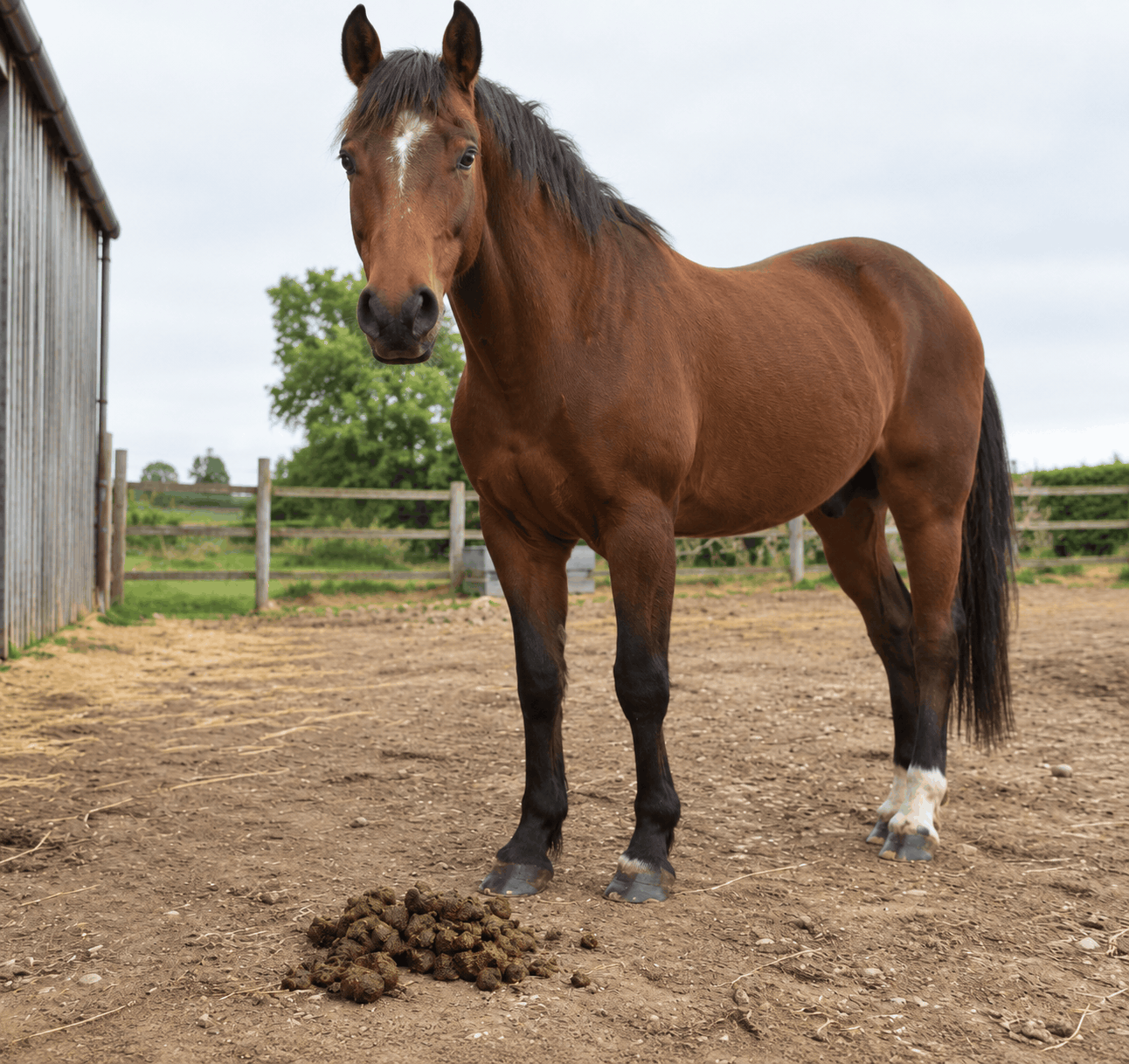
Based on fecal examinations conducted over the past three years, we provide you with an overview of the most common parasites found in horses in Germany.
The most common parasites in horses are small strongyles (palisade worms), which live in the large intestine. Severe infestations, especially in young animals, can lead to weight loss, diarrhea, colic, or stunted growth. The closely related large strongyles are now rarely found in Central Europe, as they have been virtually eradicated through consistent deworming management. During their life cycle, large strongyles migrate into blood vessels and can thereby cause thrombosis, aneurysms, and intestinal infarcts.
The widespread horse roundworms (Oxyuris equi) lay their eggs in the tail and anal regions, causing severe itching and, as a result, tail rubbing.
For foals and yearlings, the horse roundworm (Parascaris equorum) plays an important role. The roundworm larvae migrate through the liver and lungs, which can cause coughing and fever in addition to the colic and diarrhea caused by the adult stages. An infestation with dwarf threadworms (Strongyloides westeri) can also cause diarrhea in foals.
Most parasites can be detected through a routine parasitological fecal examination. The so-called McMaster method is also used to determine the number of eggs per gram of feces and can thus serve as a basis for deciding whether to administer deworming treatment. To reliably diagnose an infestation with pinworms, several adhesive tape swabs must be taken from the anal region and examined under a microscope. Laboklin offers testing profiles tailored to horses. Please feel free to ask your veterinarian for more information.
Effective parasite management involves not only reducing sources of infection through mucking out and rotating pastures, but also regular fecal examinations and the targeted use of deworming medications. Foals should be dewormed no earlier than 2–3 months of age. To prevent infection early in life, broodmares should be treated toward the end of gestation and, if necessary, again shortly after foaling.
For more information on parasites and deworming, visit the ESCCAP website (Horse Recommendations for GI Parasites | ESCCAP GERMANY)