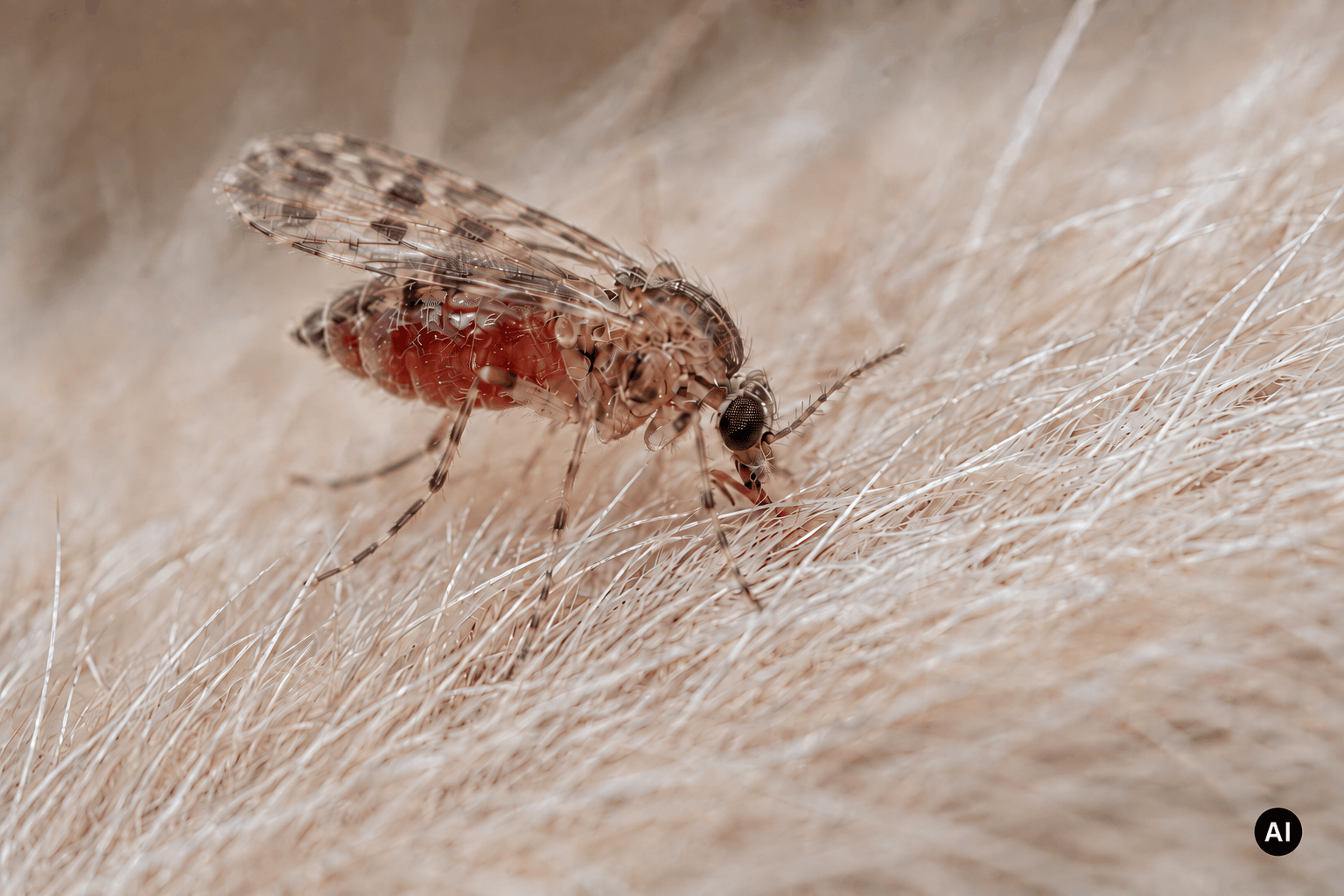
The Shamonda virus (SHAV) was first detected in Germany in early August 2026 and is currently spreading across several European countries. So far, cattle have been the most affected, with symptoms including fever, diarrhea, loss of appetite, and a decline in milk production. However, cases have now also been detected in sheep, goats, and alpacas. The virus is transmitted by midges, small blood-sucking insects of the genus Culicoides (see photo).
In horses, the focus is currently on neurological diseases in particular. In Switzerland and southern Germany, horses with unexplained neurological symptoms were examined. The Shamonda virus was detected in the brain tissue of several of these animals. In one case, a high viral load was also detected. This suggests a possible link to the neurological abnormalities, which is currently being investigated further.
Since no vaccine is currently available, protection against midges and other biting insects is particularly important.
LABOKLIN now offers direct pathogen detection via PCR. If a horse exhibits neurological abnormalities, it should be examined by a veterinarian as soon as possible. Depending on the clinical suspicion, the veterinarian can arrange for further diagnostic testing.