




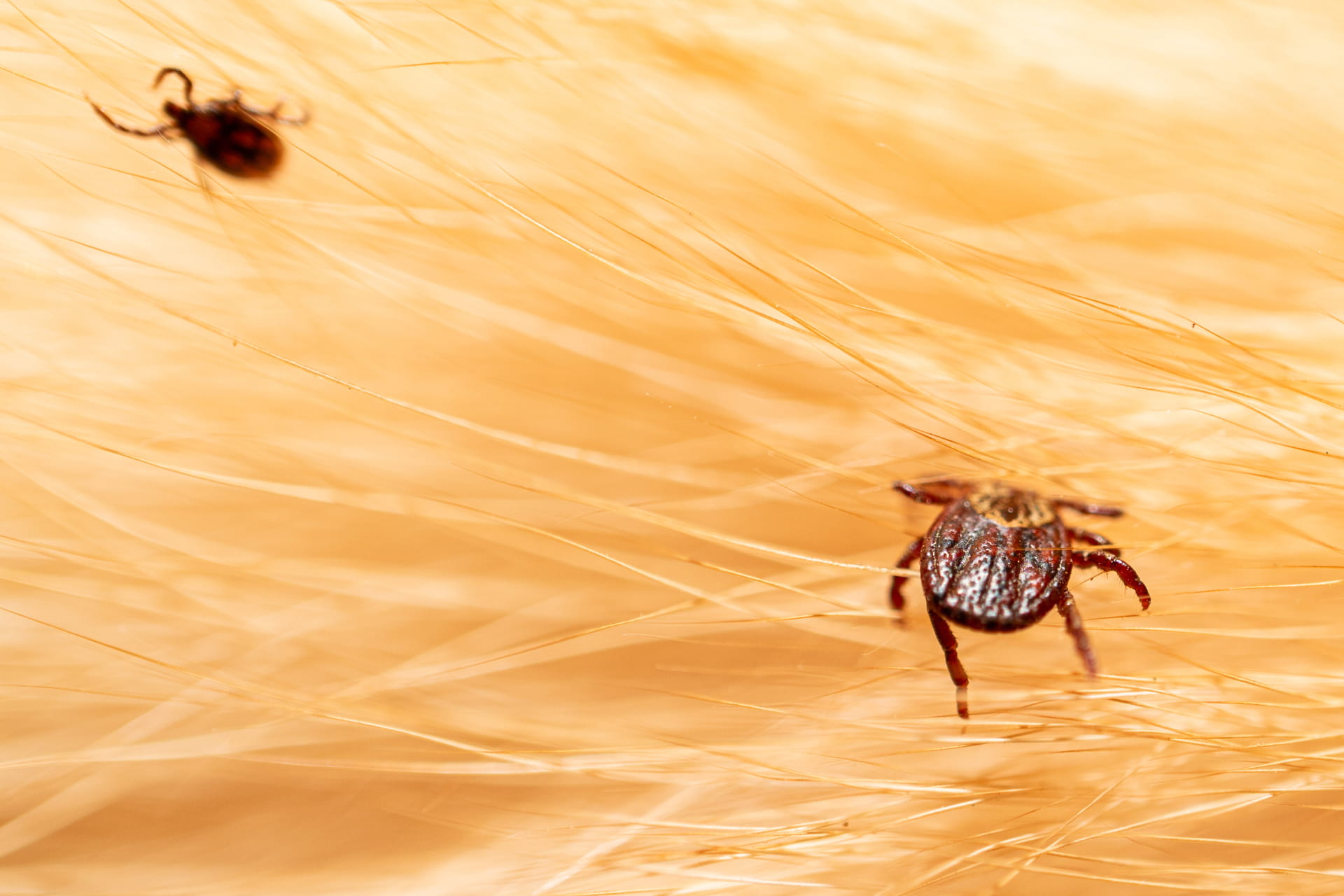
Babesiosis in dogs – Invisible danger after a tick bite Babesiosis (also known as “canine malaria” or piroplasmosis) is a disease caused by unicellular parasites (babesia) that dogs can get from the bite of infected ticks and is increasingly occurring in Germany. It is mainly transmitted by the meadow tick and the brown dog tick, […]
INFOTHEK | News

Primary hyperparathyroidism (PHPT) in the Keeshond Primary hyperparathyroidism (PHPT) is a hereditary disease in which the regulation of calcium levels in the body is disturbed. Possible consequences are an increasing weakening of the bones, kidney problems and even kidney failure as well as other metabolic disorders. A variant in the SIRT6 gene was found in […]

Available again: Adult Onset Neuropathy (AON) in the English Cocker Spaniel and Field Spaniel The genetic test for Adult Onset Neuropathy (AON) is now available again! The test is carried out by a partner laboratory and is offered for the English Cocker Spaniel and Field Spaniel breeds. AON is a hereditary disease whose symptoms are […]

Clopidogrel efficacy in the cat Arterial thromboembolism (ATE) is a serious and often life-threatening complication in cats with hypertrophic cardiomyopathy (HCM) or other heart diseases. It occurs when a blood clot (thrombus) blocks an artery and thus interrupts the flow of blood to organs or limbs. The consequences are often severe tissue damage or infarctions. […]

Hypertrophic cardiomyopathy (HCM) in the Golden Retriever Hypertrophic cardiomyopathy (HCM) is a genetic heart disease in which there is an abnormal thickening of the left ventricle. As this ventricle is responsible for the blood supply to the entire body, HCM can significantly impair the heart’s pumping capacity. This can result in a reduced oxygen supply […]

Cerebellar abiotrophy (CA) in the Australian Kelpie Cerebellar abiotrophy (CA) is a hereditary neurological disorder that causes changes in the cerebellum, which is particularly responsible for movement coordination and balance. Two genetic risk markers associated with CA have been identified in the Australian Kelpie. Clinical manifestations of the disease include pronounced ataxia, head tremor, a […]